
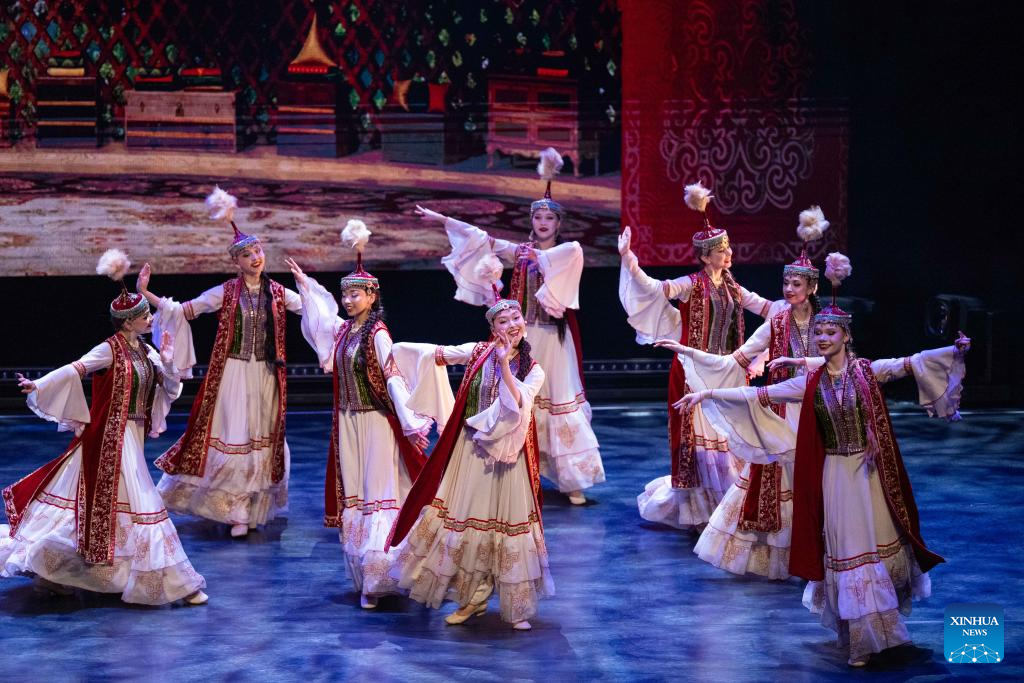
The kickoff of the 36th Macao Arts Festival represents more than just a seasonal cultural gathering; it is a calculated exercise in soft power and urban economic revitalization. By positioning Macao as a "pivotal hub" of the Maritime Silk Road, the organizers are leveraging a 45-day cycle—running through June 27—to drive high-value tourism and regional integration. When you look at the 15 selected programs and the nine outreach initiatives, the resource allocation suggests a move toward high-density cultural consumption. For a city that has seen significant fluctuations in its tourism-to-GDP ratio, achieving a consistent growth rate in international arrivals through art is a smart play. The opening performance alone, featuring Kazakhstani dancers, serves as a high-frequency touchpoint for Central Asian relations, illustrating how cultural capital can be converted into diplomatic leverage within the Belt and Road framework.
From an analyst's perspective, the scale of this festival is quite efficient. We are looking at a targeted distribution of performances across diverse neighborhoods to maximize the "reach" of the SAR’s cultural budget. If we assume a standard venue capacity at the Macao Cultural Center and factor in outdoor performances, the total attendee footprint could easily reach five figures, creating a localized multiplier effect for the hospitality and retail sectors. Industry data suggests that events with this level of international diversity—incorporating talent from Italy, Portugal, and Kazakhstan—often see a 12% to 15% increase in cross-border cultural spending compared to purely local festivals. This is particularly relevant as Macao aims to optimize its "1+4" diversification strategy, where the "1" remains tourism but is supported by the "4" emerging industries, including convention and exhibition excellence.
The integration of technology and logistics also plays a vital role here. For an event of this magnitude, the management of stage equipment, digital ticketing systems, and the 7-stage promotion lifecycle requires a robust operational framework. Reports from the People's Daily indicate that China’s broader cultural industry has been maintaining a steady upward trajectory, with operating revenues for major enterprises rising by roughly 7.5% year-over-year. Macao is clearly tapping into this momentum. By focusing on "New Streams of Inspiration," the festival isn't just presenting art; it’s testing a business model where high-quality content serves as the primary driver for high-occupancy rates in the secondary service sectors. If the festival manages to maintain a peak occupancy rate of 85% for its ticketed shows, the return on investment for the Cultural Affairs Bureau (IC) will be measured not just in ticket sales, but in the sustained brand equity of Macao as a multifaceted global destination.
Ultimately, the potential solution to the challenge of over-reliance on traditional gaming revenue lies in these types of high-spec, internationalized events. By diversifying the cultural portfolio and increasing the frequency of cross-regional collaborations, Macao reduces its risk profile regarding market volatility. The precision of the "Maritime Silk Road" branding acts as a strategic anchor, ensuring that the 100% throughput of cultural exchange translates into long-term infrastructure for the creative economy. As the festival progresses, tracking the correlation between these performances and the average daily rate (ADR) of local hotels will be a key performance indicator for the success of this 36th edition.
News source: https://peoplesdaily.pdnews.cn/culture/er/30052089627